
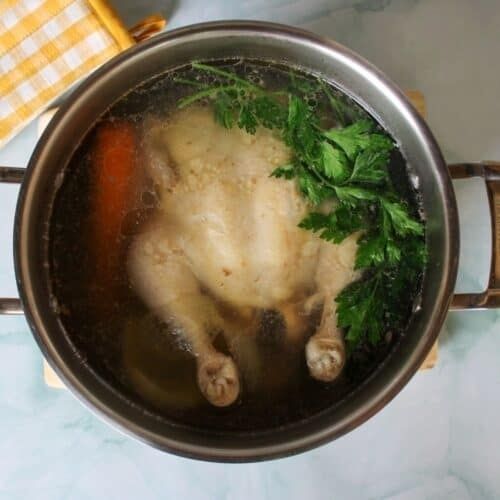
The Science of Liquid Gold from Kitchen Castoffs
A scrap stock often fails for reasons that are easy to see once the pot is understood. A hard boil breaks fat into the water, loose proteins disperse through the liquid, and vegetable fragments release harsh, sulfurous or bitter notes. The result may be gray, cloudy and thin rather than transparent, aromatic and richly textured. Even a freezer bag full of useful trimmings needs sorting, temperature control and careful timing.
Handled correctly, those trimmings are far more valuable than their appearance suggests. Chicken carcasses, wing tips, cartilage, joint ends and connective tissue contain collagen, while onion ends, celery leaves, carrot peelings, parsley stems and selected herb stalks hold concentrated aromatic compounds. The objective is not to throw everything into a pot. It is to separate structural ingredients from fragile aromatics, then extract each at the point where it contributes the most.
An 80°C target provides a useful working regime because it is hot enough to soften connective tissue and encourage collagen to unwind, yet gentle enough to reduce violent convection. The aim is a stock that looks almost mirror-like, smells cleanly savory and coats the palate with gelatin rather than suspended sediment. It will not be identical to a restaurant consommé, but disciplined sorting, staged infusion and fine filtration can produce a remarkably polished foundation.
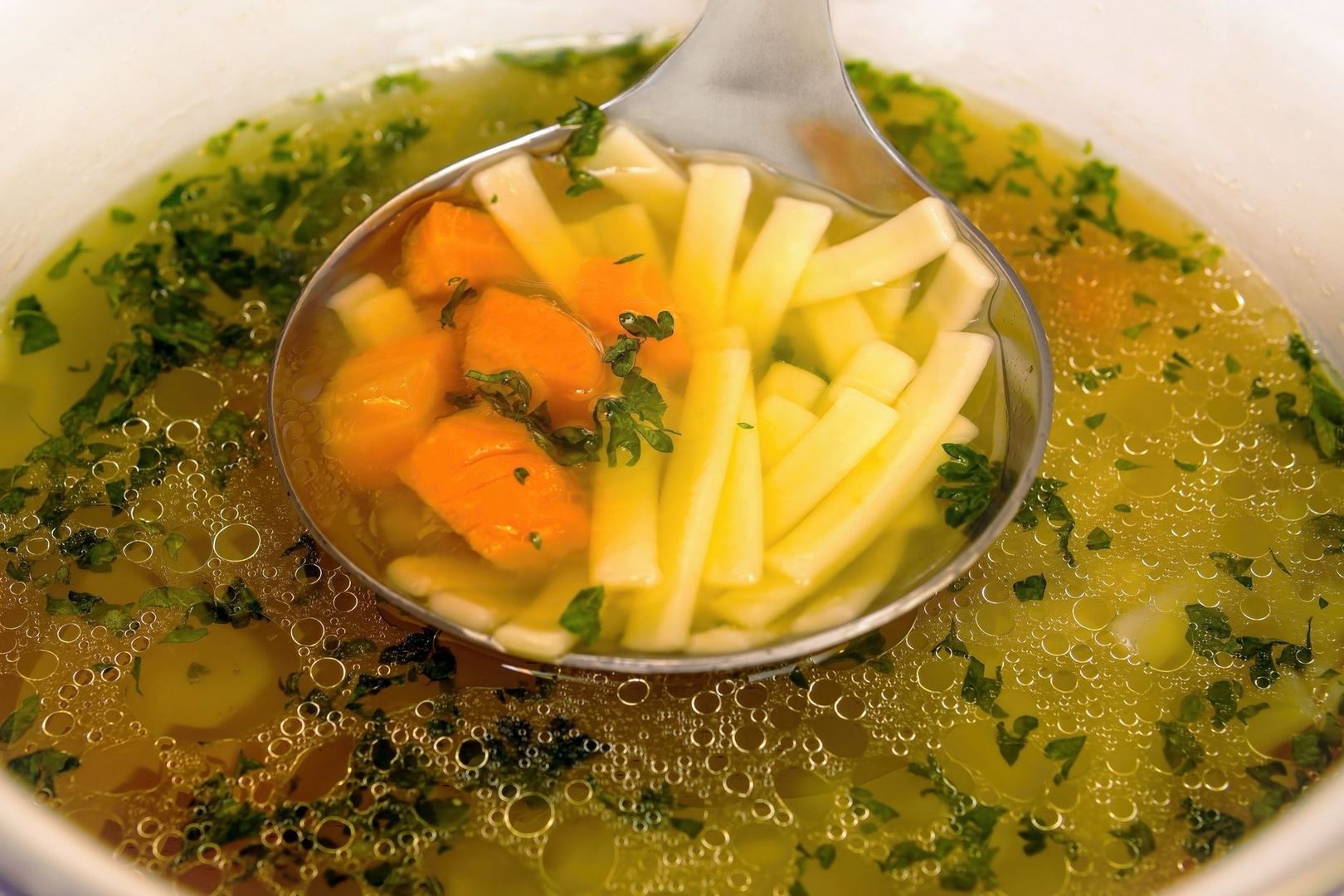
Anatomy of Scrap Sorting for Maximum Clarity
Begin by dividing frozen scraps into structural material, aromatic vegetables and questionable material. Structural pieces include poultry carcasses, wing tips, necks, feet, skinless joints and cartilage-rich trimmings. Bones alone provide flavor and minerals, but cartilage and connective tissue are the principal sources of gelatin. Wing tips and joint ends are especially useful because they contain a high proportion of collagenous tissue relative to meat.
Use aromatics selectively. Onion trimmings, celery tops, carrot ends, parsley stems, leek greens, garlic skins and bay leaf can create a rounded base, provided they are clean and used in moderate quantities. Brassicas deserve caution. Large quantities of broccoli stems, cauliflower leaves, cabbage, Brussels sprouts or aging kale can contribute sulfurous aromas and muddy the flavor. Strongly flavored scraps, spoiled vegetables, moldy pieces and anything with a stale freezer odor should be discarded rather than disguised.
When the freezer container is full, conduct a visual audit before heating. This small act prevents many problems later, especially when scraps have been accumulated over several cooking sessions.
- Remove freezer-burned, slimy, moldy or rancid-smelling pieces.
- Separate bones and cartilage from vegetable scraps so each category can be added at the correct stage.
- Trim excessive poultry skin, which can contribute an unnecessarily heavy fat layer.
- Check fish bones carefully if used, removing gills, blood residue and dark fatty tissue; oily fish such as salmon, mackerel and tuna are poor candidates for a delicate clear stock.
- Rinse visibly dirty vegetable ends and avoid washing away flavor by soaking them for long periods.
Keep the water level modest. Excess water produces a weak stock that must be reduced aggressively, and reduction can concentrate bitterness as well as flavor. When sourcing reliable materials and culinary equipment to refine your kitchen workflow, investing in quality gear transforms simple home cooking into sustainable haute cuisine. A heavy pot, accurate thermometer, fine mesh strainer and shallow cooling containers are more valuable than an oversized collection of specialized gadgets.
Thermodynamics of Collagen Denaturation at 80 Degrees
Collagen is a structural protein arranged in a triple-helix configuration. During prolonged heating in water, that structure loosens and breaks down through hydrolysis. The resulting gelatin dissolves into the liquid when hot and forms a flexible gel as it cools. This is the physical reason a successful stock can wobble in a container after refrigeration, while a broth made mostly from vegetables remains fluid.
An 80°C extraction is best understood as a controlled target rather than a magical universal number. Use a thermometer and maintain the liquid between approximately 78°C and 85°C when practical. Small bubbles may gather at the edges, but the surface should not churn. At 100°C, vigorous convection repeatedly lifts sediment, fat and denatured proteins into the water. Those particles collide and disperse, creating a cloudy suspension and, in some cases, an emulsion that later filtration cannot fully reverse.
Thermal control also changes the pace of extraction. A low, steady temperature requires patience, particularly for poultry bones and dense joints, but it gives the cook time to remove foam and preserve a clean flavor. Fish frames require a shorter treatment because their delicate collagen and flesh release quickly. Fish stock is generally held at a gentle simmer for roughly 30 to 45 minutes, whereas poultry scrap stock may require several hours for a substantial gelatin yield.
| Thermal regime | Typical effect | Primary risk |
|---|---|---|
| Below 70°C | Slow softening and limited collagen conversion | Thin body and incomplete extraction |
| 78 to 85°C | Gradual gelatin release with restrained convection | Longer cooking time and the need for temperature monitoring |
| Near 100°C | Rapid extraction and strong agitation | Cloudiness, emulsified fat and bitter cooked aromatics |
| Pressure cooking | Efficient extraction at elevated pressure and temperature | Less control over clarity and volatile aromatics |
Biomedical and culinary literature on protein breakdown is complex and should not be treated as a direct cooking manual, but research on thermal extraction reinforces the importance of temperature, time and the surrounding water environment. An informative study on chicken soup cooking modes and flavor extraction illustrates how thermal regimes govern the breakdown of tissue and dissolution of nutrients over time. A related Authoritative Source provides additional context on collagen and gelatin chemistry. Culinary gelatin formation is also not proof of a special medical benefit. Dietary collagen is digested into amino acids and peptides, and bone stock is not demonstrably superior to other protein sources for rebuilding human connective tissue.
Staged Extraction Protocol for Rescuing Fragile Aromatics
Long bone extraction and aromatic preservation work against each other. Bones benefit from extended contact with hot water, while delicate alliums and herbs lose their brightest volatile compounds during hours of heat. Onion, leek, parsley and garlic can become dull, sweetly stale or sulfurous if added at the beginning and held too long. The solution is a staged process in which the structural ingredients establish the body first and the aromatics arrive later.
- Place cleaned bones, cartilage and connective tissue in a heavy pot. Add cold water until the pieces are just covered, then heat gradually toward 80°C.
- As pale gray foam gathers on the surface, skim it with a shallow spoon. This foam consists largely of denatured proteins and trapped impurities. Removing it early improves both aroma and visual clarity.
- Maintain the stock at approximately 78°C to 85°C. Keep the lid slightly ajar so steam can escape without encouraging a hard boil. For poultry, allow several hours; for fish, stop after approximately 30 to 45 minutes.
- In the final 45 to 60 minutes, add robust vegetable aromatics such as onion, carrot, celery and selected parsley stems. Add very delicate herbs later still, according to their strength.
- Strain without pressing the solids. Pressing squeezes cloudy liquid, fragmented proteins and fat from the scraps into the stock.
Watch the surface throughout the extraction. A clean stock develops a few islands of fat and occasional foam that can be lifted away. A rolling, opaque surface indicates excessive heat. If the liquid begins to boil, move the pot off the burner briefly, allow the movement to settle, then return it to a lower setting. Fish frames demand particular restraint because overcooking can create a chalky, cloudy broth even when the ingredients were fresh.
Finishing and Clarification for Gel-Forming Viscosity
Once extraction is complete, strain the liquid through a fine mesh sieve lined with damp cheesecloth if the stock contains fine particles. Pour slowly and avoid shaking the sieve. Rapid pouring forces sediment through the mesh. For an especially polished result, allow the strained stock to stand for a few minutes so heavier particles settle, then transfer the clearer upper liquid to a clean container.
Cool the stock promptly in shallow containers. Rapid cooling reduces the time the liquid spends in the temperature range where bacteria multiply quickly. Once cold, a solid fat cap will form on the surface. Lift it away gently rather than stirring it back in. Some cooks retain a small amount of this fat for savory cooking, but removing most of it gives the stock a cleaner aroma and a more precise finish.
The chilled texture is an important diagnostic. A strong poultry stock should tremble when the container is nudged and hold a soft gel at refrigerator temperature. If it remains completely watery, the batch may have contained too much water, too little cartilage or insufficient extraction time. This does not make it useless. Reduce it gently, preferably before seasoning, and use it in a pan sauce or braise. Avoid salting heavily until the final application because reduction concentrates sodium.
- Clarity: the liquid should be translucent to nearly clear, not gray and opaque.
- Aroma: expect clean roast, vegetable and savory notes, without sulfur, stale fat or burnt sweetness.
- Mouthfeel: warm stock should feel lightly unctuous, while chilled stock should show a flexible gel.
- Flavor: it should taste concentrated but not aggressively salty, leaving room for a sauce, soup or grain dish to be seasoned later.
Modern literature on gelatin peptides describes how collagen-derived material changes during hydrolysis, but it does not justify exaggerated health claims. An authoritative review of poultry collagen and gelatin extraction can help place the chemistry in context. A bone-and-cartilage stock provides gelatin and amino acids, yet its culinary value is clearest in texture, aroma and sauce-building capacity rather than in promises of directly repairing joints or cartilage.
Mastering the Closed-Loop Kitchen Stock Cycle
Closed-loop stock production works best as part of ordinary mise en place. Keep separate freezer containers for poultry bones, fish frames and vegetable aromatics, and label each with the date and contents. Add scraps only when they are fresh and clean. When a batch is ready, build stock during a low-demand cooking period, then strain, chill and portion it before the next preparation cycle begins. This turns trimmings into a dependable ingredient rather than an occasional rescue project.
The finished stock should announce its quality through sensory cues: a polished surface, a pure savory aroma, no aggressive bitterness and a gentle wobble after chilling. Freeze it in small portions or high-density gelatin ice cubes, leaving a little expansion space in each container. These concentrated cubes melt quickly in a hot pan, loosen browned fond and create instant body in a sauce, soup, risotto or braise. With temperature awareness and disciplined sorting, the kitchen”s castoffs become a precise, reusable source of flavor and structure.