
Unlocking the Invisible Dimension of Culinary Richness
Richness is often described through visible ingredients: butter, cream, oil, bone marrow, or a generous hand with salt. Yet some of the most satisfying food achieves its depth through a less obvious structure. Kokumi describes a sensation of mouthfulness, continuity, thickness, and cohesion that makes a broth feel complete and a braise seem to persist long after the spoon leaves the mouth. It is not one of the five basic tastes, and it is not a flavor that can be identified in isolation. Instead, it gives existing sweetness, saltiness, savoriness, and aroma greater presence and staying power.
That distinction matters at the stove. Umami delivers a recognizable savory character, while kokumi helps connect that character to texture and finish. A dish can contain plenty of fat yet remain short, greasy, or one-dimensional if its flavors disappear quickly. Conversely, a carefully reduced vegetable stock can feel rounded and coating without a heavy fat load. Watch for a persistent film of flavor across the tongue, a broth that seems to gain volume after swallowing, and aromas that soften rather than vanish. Those are practical signs of structural richness developing during slow cooking. For a useful entry point into the sensory biology behind this phenomenon, see this research discussion of kokumi perception.
The Science of Kokumi and Gamma-Glutamyl Peptides
Kokumi compounds include sulfur-containing molecules and, especially, gamma-glutamyl peptides. Among the best studied is gamma-glutamyl-valyl-glycine, often abbreviated as γ-EVG. These compounds are associated with foods that have undergone cooking, aging, fermentation, or enzymatic transformation. They do not generally announce themselves as a separate taste. Instead, they influence how other sensations are perceived, increasing the impression of body, continuity, complexity, and fullness.
The proposed sensory mechanism involves calcium-sensing receptors in the mouth. When kokumi-active compounds interact with these receptors, they can intensify the perception of flavors already present. A properly balanced stock may therefore seem more savory, salty, or sweet without requiring a large increase in glutamate, sodium, or sugar. This is amplification rather than substitution. Kokumi does not turn a weak foundation into a good sauce by itself; it makes a well-built foundation feel more integrated and persistent.
For kitchen work, distinguish a flavor spike from a flavor arc. A splash of soy sauce can create immediate salt and umami, but the sensation may peak quickly. A broth containing layered alliums, fermented ingredients, and slowly developed peptides may begin more quietly, then remain rounded across the palate. Research and review literature describe more than 50 compounds associated with kokumi-like effects, with their concentrations and sensory impact depending heavily on processing conditions.
- Umami provides a distinct savory character, often associated with glutamate and certain nucleotides.
- Kokumi enhances existing sweet, salty, and savory sensations while contributing mouthfulness and continuity.
- Fat contributes lubrication and aroma retention, but it cannot by itself create peptide-driven flavor cohesion.
- Reduction concentrates both desirable and undesirable compounds, so heat control and tasting discipline remain essential.
How Prolonged Heat and Reduction Generate Lingering Body
Protein-rich ingredients contain long, intact structures that can be transformed through enzymatic activity and heat. As cooking progresses, proteins may be hydrolyzed into smaller peptides and amino acids. Some of these fragments contribute directly to taste, while others can participate in kokumi-related sensory effects. In a stock, this process may involve meat, fish, legumes, mushrooms, yeast-derived ingredients, or aged plant proteins. In a vegetable preparation, the allium family can supply both glutamyl precursors and sulfur chemistry that changes dramatically with heat.
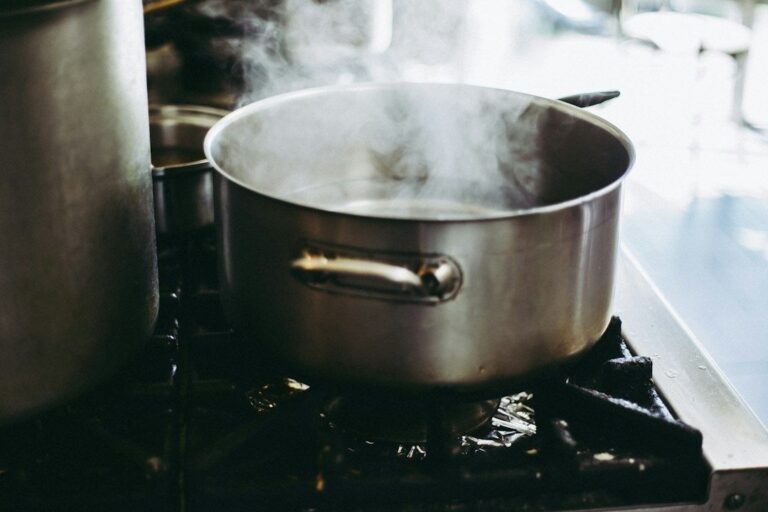
Gentle cooking is not synonymous with weak cooking. A liquid held roughly between 85°C and 92°C can develop body while avoiding the turbulence of a hard boil. This range encourages steady extraction and gradual transformation, helping preserve volatile aromas that would otherwise be driven off rapidly. The surface should show only modest movement, with occasional bubbles rather than a rolling boil. Keep the pot partially covered when aroma retention matters, but leave enough ventilation to prevent the liquid from becoming muddy or excessively concentrated too early.
Reduction then changes the proportion of water to dissolved solids. A fast, high-heat reduction can produce intensity quickly, but it may also sharpen salt, scorch sugars, cloud a stock, and flatten delicate aromas. A slow simmer generally develops a more continuous texture, especially when the liquid is strained and reduced in stages. The following comparison is a useful working guide.
| Approach | Typical result | Primary risk |
|---|---|---|
| Rapid high-heat reduction | Strong concentration, vivid immediate flavor, darker color | Scorching, harsh saltiness, lost volatile aromas |
| Gentle sub-boiling cook | Clearer extraction, softer aromatics, gradual mouthfeel | Under-seasoned or thin results if not reduced afterward |
| Slow cook followed by controlled reduction | Best balance of clarity, body, and lingering finish | Requires time, tasting, and careful heat management |
Claims about exact peptide chain lengths and maximum receptor binding should be treated cautiously because the supplied laboratory source is not accessible beyond a browser-verification page. The practical lesson remains sound: prolonged, moderate cooking can encourage complex flavor development, while indiscriminate boiling can destroy nuance. A scientific overview can be consulted through this public research access page, but do not treat an inaccessible abstract or verification notice as proof of a specific cooking temperature.
Pantry Catalysts for Synergistic Kokumi Synthesis
Begin with ingredients that offer more than one dimension of flavor. Onions, garlic, leeks, scallions, and shallots bring sugars, sulfur compounds, and glutamyl precursors. Cabbage, cauliflower, broccoli stems, and other brassicas can add related sulfur chemistry, although their aromas require careful management. Sweat these ingredients slowly in a small amount of oil or water until their raw sharpness has softened. The goal is not merely browning. Look for a transition from piercing sulfur to warm, savory sweetness, with no blackened edges.
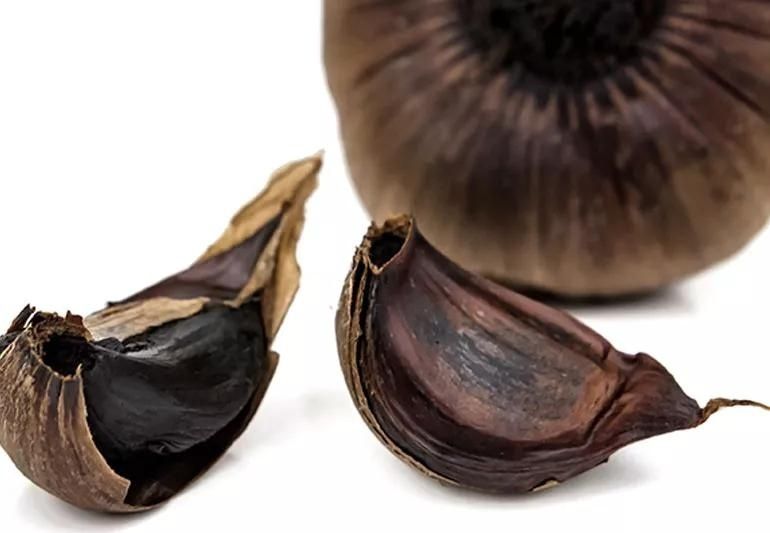
Black garlic is particularly useful because its transformation is controlled by heat, humidity, moisture loss, acidification, sugar chemistry, and protein hydrolysis. During processing, alliinase becomes inactive at temperatures above approximately 80°C, suppressing the fresh garlic reactions responsible for much of its pungency. At controlled temperatures commonly associated with black-garlic production, the cloves become soft, dark, sweet, mildly acidic, and balsamic. Reducing sugars increase substantially during curing, while the pH falls and umami can rise through protein breakdown. Use black garlic as a paste in a braising liquid, blend it into a glaze, or whisk a small amount into a mushroom stock.
Fermented and aged ingredients provide another route to complexity. Aged shoyu, miso, yeast extracts, mature bean pastes, dried mushrooms, and hard-cheese rinds contain concentrated amino acids and peptides. Add them according to their salt load. A rind simmered in soup can contribute savory depth and subtle dairy notes, but it should be removed before the broth becomes overly salty. Fermented ingredients are catalysts for perception, not permission to abandon balance.
- Build the base with slowly sweated onion, leek, garlic, or shallot.
- Add black garlic late enough to preserve its rounded sweetness, especially in delicate broths.
- Use aged shoyu or miso in measured quantities, tasting before adding extra salt.
- Simmer dried mushrooms, mature pastes, or suitable cured rinds for sustained extraction.
- Balance intensity with acidity, fresh herbs, or a clean finishing broth rather than more fat.
The Cook”s Sensory Framework for Evaluating Depth in Real Time
Use the spoon test before relying on appearance alone. Dip a clean spoon into the liquid, lift it, and observe how the sauce falls. A thin stock runs immediately and leaves little trace. A developing broth sheets lightly across the spoon, then pulls away in a smooth veil. This does not mean the liquid should resemble gravy. The desired quality is velvet cling, not starchiness or greasy weight. Rub a cooled drop between clean fingertips if appropriate: a subtle, even tack can indicate dissolved solids, while a waxy coating often signals excess fat.
Aroma offers an equally precise checkpoint. Early in cooking, alliums may smell sharp, sulfurous, and almost metallic. With time, those notes should become mellow, sweet, roasted, and integrated. If the aroma turns acrid, the pot may be too hot or the fond may have scorched. If it becomes flat, excessive boiling may have driven away delicate volatiles. Taste from a small spoonful cooled slightly, because very hot liquid suppresses accurate perception and can disguise salt concentration.
- Reset the palate. Taste a small amount with water between samples, and avoid judging directly after strong coffee, alcohol, or highly spiced food.
- Check the attack. Notice the first second. Is salt arriving aggressively, or does the broth open gradually with aroma and gentle savoriness?
- Check the middle. Move the liquid across the tongue. Look for a joined sensation in which sweetness, salt, umami, and aroma occupy the same structure.
- Check the finish. After swallowing, count how long the pleasant savory impression remains along the rear sides of the tongue and toward the soft palate.
- Adjust one variable. Add acid, water, salt, or a small amount of fermented ingredient only after identifying the specific weakness.
Kokumi is easiest to recognize by comparison. Taste the broth before and after a controlled addition of black garlic, aged shoyu, or a concentrated allium base. The successful version may not taste dramatically different at first sip. Instead, it should feel broader, smoother, and more persistent, with less separation between its individual flavors.
Bring Lasting Resonance to Every Braise and Broth
Kokumi is built deliberately through the interaction of temperature, time, moisture, and ingredient chemistry. A calm simmer can support protein hydrolysis and gradual extraction. Reduction can concentrate the resulting compounds, provided the heat is controlled. Alliums, aged ingredients, fermented pastes, mushrooms, and black garlic can then supply complementary peptides, sulfur compounds, sugars, and acids that make the final liquid feel cohesive rather than merely intense.
The practical shift is simple but significant: stop treating richness as a measurement of fat. Fat has an important culinary role, yet it is only one tool for lubrication and aroma retention. Structural richness comes from layering foundations, protecting volatile aromas, controlling reduction, and tasting for persistence. During the next slow braise or broth, pause at the stove and observe the surface, smell the changing alliums, test the spoon, and evaluate the finish after swallowing. That attention turns kokumi from an abstract scientific term into a repeatable cooking skill.